What to Expect on a Road Cycling Trip in the Algarve: The Complete 2025 Guide
What to Expect on a Road Cycling Trip in the Algarve: The Complete 2025 Guide
The Algarve. For many, the name instantly brings to mind postcard images: golden cliffs, pristine beaches, and long, lazy days in the sun. But for us cyclists, this region in southern Portugal has become much more than that. Over the past decade, it has undergone a profound transformation: the Algarve now stands as a top-tier cycling destination, rivaling established giants like Mallorca or Girona.
If you’re thinking about swapping grey skies for Portuguese sunshine (over 300 days a year!), here’s exactly what to expect. Far from the usual tourist brochures, this guide dives into the on-the-ground reality: topography, logistical challenges, and local gems. Ready to ride?
Three Regions, Three Distinct Cycling Worlds
The number-one beginner mistake? Assuming the Algarve is uniform. The region stretches from west to east and offers three radically different “menus” for your rides.
The West (Sagres – Lagos): The Atlantic’s Breath
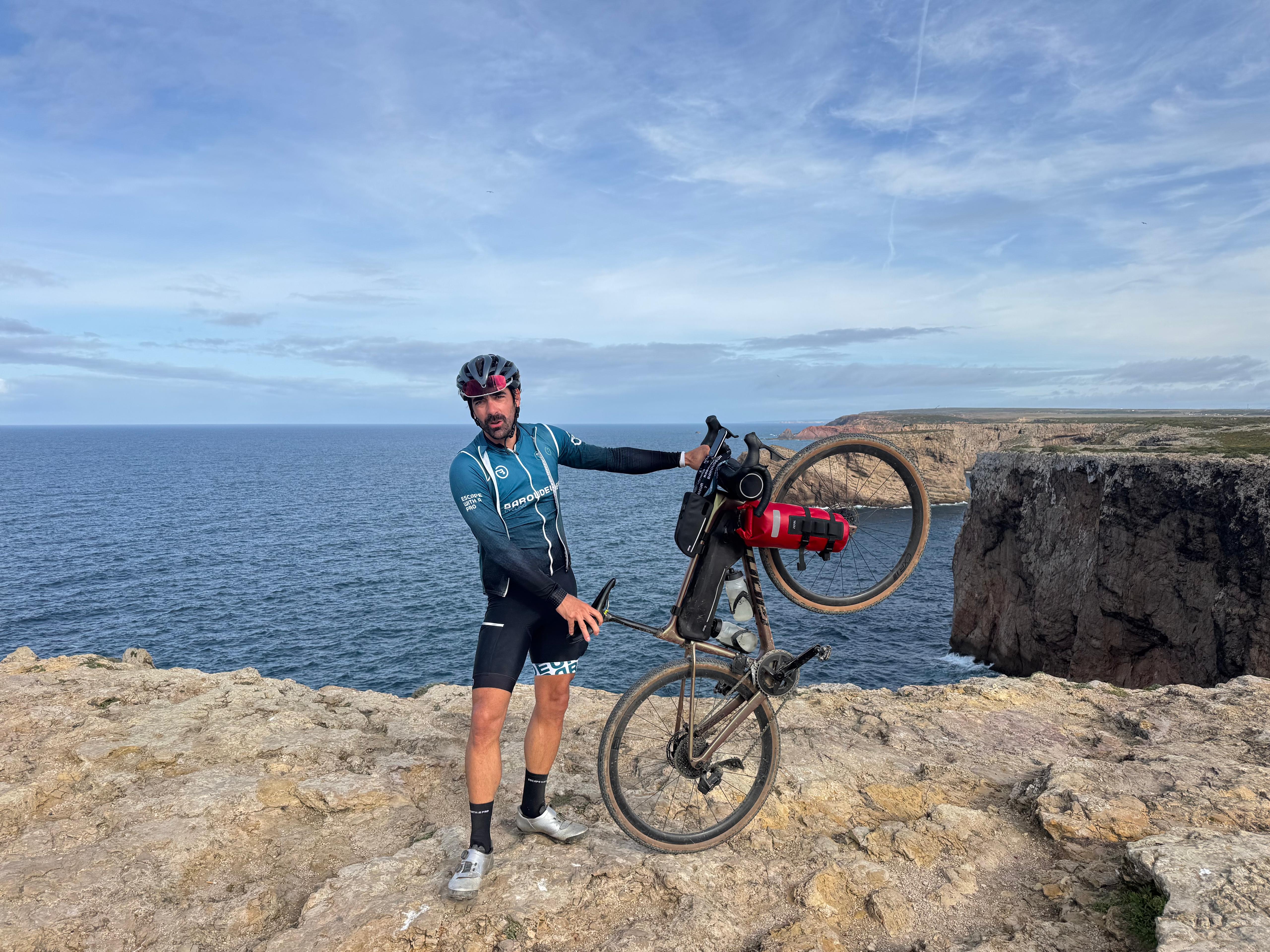
If you enjoy wild, dramatic landscapes, the area around Lagos and Sagres is made for you. It’s a land of contrasts where stunning coastal beauty comes at the price of full exposure to the elements.
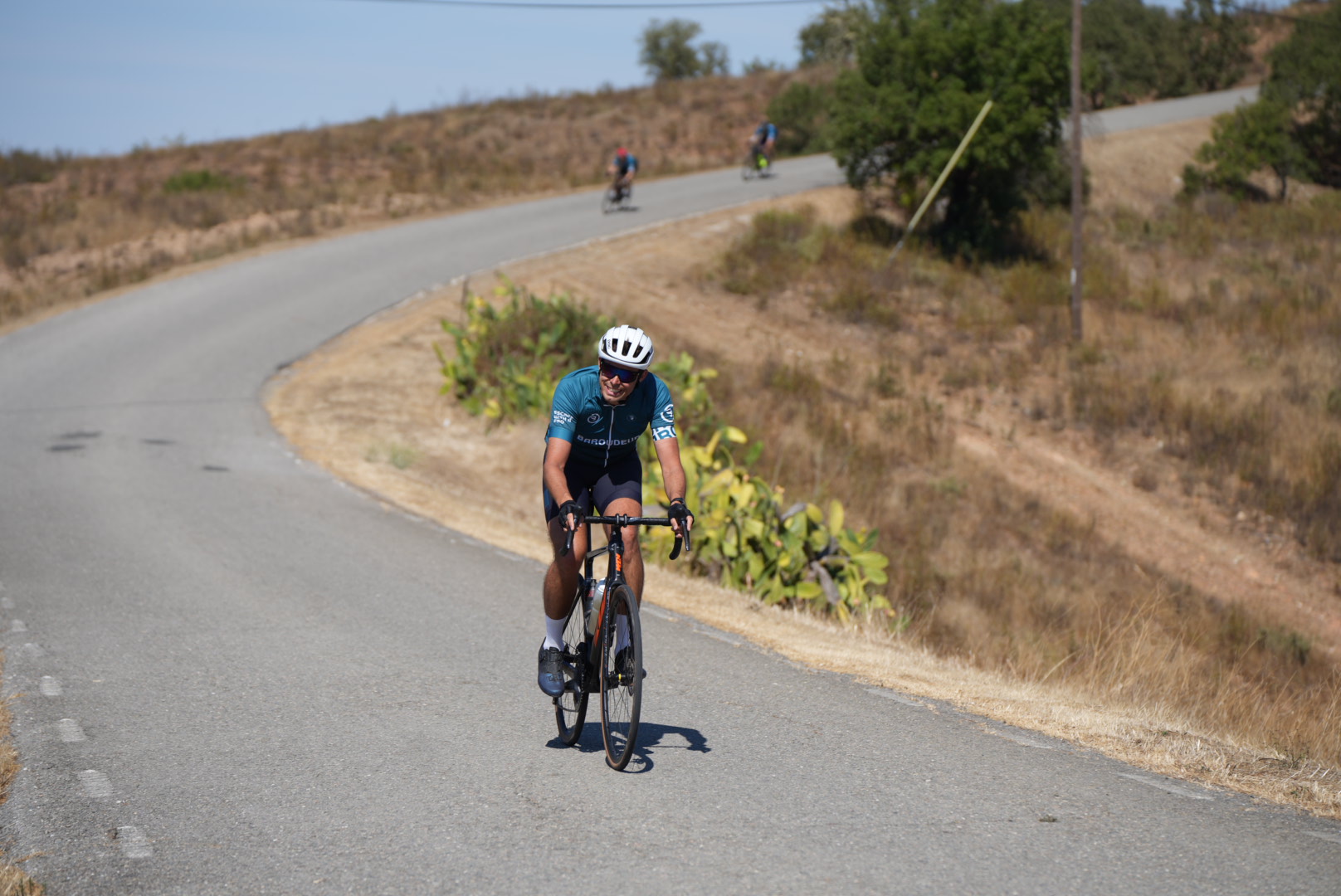
Terrain: Don’t expect flat. This is the kingdom of “rollers” — endless sequences of short climbs and descents that sap the legs without ever giving you a true high-mountain pass.
The wind factor: Cyclists based here must learn to master the Nortada, the dominant north/northwest wind.
Expert tip: Always start your ride headwind so you return with a tailwind when fatigue sets in.
The Centre (Loulé — our base camp): Climbers’ Territory
It’s the beating heart of tourism, but also the most direct access point to the mountains. From here, you’re right at the foot of the Serra do Caldeirão and iconic walls like Alto do Malhão (a pure power test!). It’s also where you’ll find the most “premium” infrastructure, such as the famous social hub The Bike Shed in Quinta do Lago.
The East (Tavira): Quiet Authenticity
Often cited by purists as the best option, the Tavira area offers a more serene experience. Traffic is light, the orange-covered hills are gentler, and you have a fantastic option: take the ferry across the Guadiana River and grab a coffee in Spain mid-ride!
Road Safety: The Golden Rule
Sharing the road with cars is a legitimate concern. In the Algarve, the balance is mixed but overall positive — provided you follow one absolute rule.
The Road to Avoid: The N125
There is one national road, the N125, that crosses the region. It’s dangerous, busy, and completely unsuitable for bikes. Your route planning must avoid it entirely or cross it only at safe intersections.
A Protective Highway Code
Good news: Portugal has updated its highway code to protect cyclists. Drivers must give you 1.5 meters of lateral space when overtaking. You also have the legal right to ride two abreast (as long as visibility allows), which greatly improves group safety.
Logistics: The Stress-Free Travel Formula
To ensure your adventure begins the moment you land, managing your equipment is key. At Baroudeur Cycling, we prioritize seamlessness.
Premium Bike Rental with Baroudeur Cycling
To spare you the stress (and risk of damage) of air transport, we offer high-quality rental bikes directly onsite. If performance is your focus, you can reserve top-end carbon models equipped with disc brakes and electronic shifting (Di2). This guarantees reliable, fully serviced equipment without logistical headaches. We clean and mechanically check the bikes daily.
Prefer bringing your own bike? Of course — that’s always possible on our trips.
When to Come? Seasonal Strategy
The Algarve sells cycling year-round, but for an enjoyable, performance-oriented trip, strategy matters. At Baroudeur Cycling, we align our calendar with optimal conditions.
Spring & Autumn: The Golden Age
This is the heart of our season in the Algarve. Temperatures range from 18 to 25°C, nature is lush, and conditions are ideal for accumulating distance and elevation. We schedule our camps during this period to offer the very best of the region.
Winter: Base Training
A great time for endurance work. Mornings are cool (8–10°C), but afternoons warm up to 16–18°C. It’s peaceful, though rain showers are possible.
Summer (June–August): Destination France !
In summer, the Algarve becomes scorching, often surpassing 30°C and even reaching 40°C inland. Cycling is only possible at dawn, and coastal traffic is saturated.
Our expert choice: To ensure safety and enjoyment, we do not run Algarve camps during this period. Instead, we migrate to the cool mountain passes of France, where high alpine terrain offers far better conditions for summer adventure.
The Baroudeur Cycling Experience: Expertise & Peace of Mind
Planning a trip to the Algarve can quickly turn into a logistical puzzle (avoiding the N125, arranging luggage transfers, choosing the right roads…). By choosing Baroudeur Cycling, you get:
- GPS routes validated meter by meter: We know the backcountry roads that avoid traffic and offer the best views. See the 5 best gravel routes.
- Local expertise: Deep, precise knowledge of the region.
- Luggage transfers: We move participants’ bags from hotel to hotel, allowing a full exploration of the Algarve.
- Full logistics: Our goal is a “ride like a pro” experience — you focus solely on riding and enjoying yourself.
Conclusion
In 2025, the Algarve is no longer just a budget-friendly alternative; it’s a fully fledged premium destination. It offers a diversity of terrain few European regions can match, from brutal central climbs to the zen-like hills of the east. With good logistical preparation and awareness of safety zones, you’ll enjoy unforgettable rides here.
Tempted by a Portuguese adventure? Discover our upcoming Algarve camps and let us handle the logistics while you enjoy the open road. Your trip starts 👉 here.
FAQ: Your Most Common Questions
What level do you need to ride in the Algarve?
The Algarve is accessible to everyone, but it’s not flat. You should be comfortable on rolling terrain. For beginners or leisure riders, the eastern area (Tavira) or using an e-bike is recommended.
Is it an expensive destination?
The Algarve remains competitive compared with France. Coffee is very cheap (under €1.50), and you can eat very well for €15–20 at lunchtime. It’s ranked as one of the most affordable destinations for 2025.
Can you use the bike paths on a road bike?
Be careful with the Ecovia do Litoral. Although marketed as a cycling route, it alternates between asphalt, dirt, and gravel. It’s perfect for gravel or hybrid bikes but often impractical for high-performance road bikes with thin tires.